

“Perfect service and communication! Exceeded expectations in every way. Highly recommend!!”
— Client Review

A stalking and harassment investigation is a structured, lawful effort to document a pattern of unwanted conduct so that a court, an employer, or law enforcement can act on credible evidence rather than a victim's word alone. Stalking is rarely a single event. It is a course of conduct, and courts respond to documented patterns. The job of a licensed investigator is to capture that pattern in a form that holds up, including dates, times, locations, communications, and corroborating proof.
The problem is widespread. According to the Centers for Disease Control and Prevention's National Intimate Partner and Sexual Violence Survey, about 1 in 3 women and 1 in 6 men in the United States have experienced stalking at some point in their lifetimes (CDC NISVS 2016/2017). Many victims struggle to get relief precisely because the conduct seems minor when described one incident at a time. A professional investigation reframes a series of "small" events as the deliberate, escalating pattern it actually is.
Stalking statutes generally require proof of repeated, willful conduct directed at a specific person that causes substantial emotional distress or fear. In Florida, for example, the conduct is defined under state stalking law, and victims can seek an injunction for protection against stalking through the courts. To support that kind of relief, an investigation focuses on establishing three things: who is responsible, that the conduct is repeated, and that it is directed at the victim.
In practice, that means assembling a timeline. An investigator may document a vehicle repeatedly parked near the victim's home or workplace, log appearances at locations the subject has no legitimate reason to visit, preserve threatening or obsessive messages across phone and social platforms, and identify the subject behind anonymous accounts where lawful methods allow. The goal is a coherent record that a judge can review in minutes and understand immediately.
This is where professional investigation differs sharply from a victim trying to gather proof alone. Licensed investigators work within strict legal boundaries, and evidence collected improperly can be thrown out or even expose the victim to liability. Surveillance must be conducted from lawful vantage points, recordings must comply with applicable consent and privacy laws, and access to records must rest on a permissible purpose.
A disciplined approach matters because a stalking case often turns on credibility. Time-stamped, methodically gathered documentation carries weight that a victim's phone photos and frantic notes usually cannot. Understanding what disciplined surveillance can lawfully document is central to building a record that survives a defense challenge. In our experience, the cases that succeed are the ones where the evidence was gathered as if it would be questioned, because it usually is.
A single incident is easy to dismiss as a misunderstanding. A documented pattern is not. When an investigator can show a judge that the same subject appeared at the victim's home on six occasions over three weeks, sent eleven messages after being told to stop, and followed the victim's vehicle on two separate days, the conduct is no longer ambiguous. That is the difference between a petition that gets denied and one that results in protection.
This documentation also serves the broader legal process. A stalking matter may move from a civil injunction to a criminal referral, or it may intersect with a divorce, custody, or workplace dispute. Investigative findings need to be organized so they can be handed to an attorney or prosecutor and used immediately. That is part of how investigative findings support a legal strategy, and it is why coordination with the victim's counsel from the outset produces stronger results than evidence gathered in a vacuum.
The most important step a victim can take is to start documenting early and stop trying to confront the situation alone. Save messages, keep a log, and avoid deleting anything, even content that feels harassing or upsetting, because deleted evidence cannot be recovered for court. From there, a licensed investigator can take over the parts that require legal access, technical skill, and lawful surveillance.
Victims should also confirm that any investigator they hire is properly licensed, carries insurance, and documents the chain of custody for evidence. Those standards are what make the work usable in court and what protect the victim from a counter-claim. Stalking and harassment are sensitive, frightening experiences. Anyone in immediate danger should contact local law enforcement first; an investigation is a complement to safety planning, not a substitute for it.
Harassment generally refers to repeated unwanted contact that alarms or annoys, while stalking adds an element of fear for one's safety and often a credible or implied threat. Both involve a course of conduct rather than a single act, and both can be documented through investigation. The exact legal definitions vary by state.
An investigator cannot file or grant the order, but the documented evidence they gather, such as a timeline, surveillance records, and preserved communications, can substantially strengthen a petition for a protective injunction. Courts respond to clear, organized proof of a pattern.
When it is gathered lawfully, documented properly, and accompanied by a clear chain of custody, investigative evidence is generally admissible. This is why working with a licensed professional matters: improperly obtained evidence can be excluded or create legal problems for the victim.
It depends on the conduct. Because stalking is defined by a repeated pattern, an investigation often runs over a period of days or weeks to capture multiple incidents. The investigator and client set a scope based on the situation and the legal goal.
A professional investigation is designed to be discreet. Surveillance and records work are conducted without alerting the subject, both to preserve the integrity of the evidence and to protect the victim's safety.
No one should have to prove they are being stalked on their own. A licensed investigation turns a frightening, scattered experience into an organized record that courts and law enforcement can act on. If you or someone you advise is dealing with stalking or persistent harassment, contact National Business Investigations to discuss a confidential, lawful approach to documenting the conduct.
About the author
Michael D. Julian brings more than 30 years of experience in private investigations and security. He served as President of the California Association of Licensed Investigators (CALI) from 2005 to 2015 and leads investigative operations at National Business Investigations, where his teams support attorneys, businesses, and individuals with lawful, court-ready evidence. Connect with Michael on LinkedIn.
Focused investigative support for complex, high-stakes matters.
Witness locates, interviews, evidence recovery, financial records investigations, cyber crimes, and asset search & recovery.
Explore Legal Investigations >>Validate claims, identify red flags, document activity, and support defensible decisions in potential fraud matters.
Explore Insurance Investigations >>Executive background investigations, due diligence, business intelligence, theft, computer forensics, and protection support.
Explore Corporate Services >>Gather the investigative information needed to evaluate legitimacy and disability level with clarity and confidence.
Explore Workers Comp Support >>Pre-litigation, mid-case, or post-judgment—identify where assets may reside to support appropriate strategy and settlement.
Explore Asset Discovery >>Obtain evidence that may not otherwise be provable in or out of court—especially when other methods fall short.
Explore Surveillance >>Having been in business for decades, we know there are many investigation companies you can call on. One does not thrive for over fifty years in this industry without a foundation of honesty, integrity, and professionalism.
We can never promise results—but we always guarantee our performance. If you are not happy with our performance, you only pay what you believe our investigation is worth.
Contact us to get started and find out why clients choose NBI for high-accountability investigative support.

California is a two-party consent state. Learn what California surveillance and recording laws mean for private investigations, evidence, and admissib…
By: Michael D. Julian
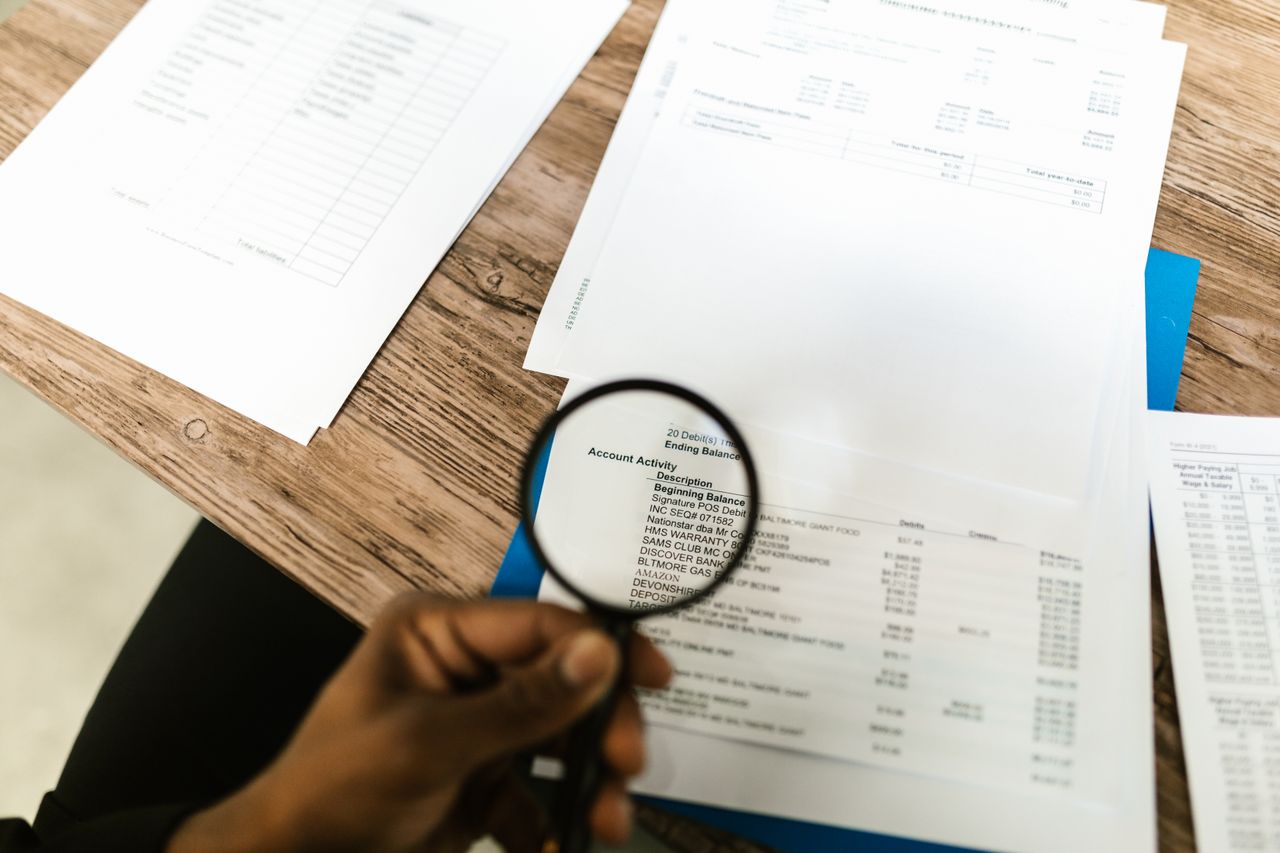
California licenses private investigators through BSIS, and the license number is only the first thing to check. Here is how to verify a firm, what a …
By: Michael D. Julian

California wage-and-hour and PAGA claims are decided on records and witnesses. Here is what a licensed investigator contributes to the defense file, f…
By: Michael D. Julian
A California money judgment is enforceable for ten years, but only if you can find something to collect. Here is how post-judgment asset investigation…
By: Michael D. Julian