

“Perfect service and communication! Exceeded expectations in every way. Highly recommend!!”
— Client Review

Hiring a private investigator in California means engaging a firm or individual licensed by the Bureau of Security and Investigative Services, a division of the California Department of Consumer Affairs, under a written agreement that defines scope, method, cost, and what the final work product will be. Everything else in the selection process is secondary to those two things: a verifiable license and a written scope.
Most people who call us have already tried something else first. They searched a name, pulled a public record, asked a friend with law enforcement experience, or hired someone informally. That is understandable, and it is also why self-directed research tends to backfire when the result eventually has to hold up in a deposition or a claim file.
California licenses private investigators through BSIS. Applicants must be at least 18, pass criminal history background checks through both the California Department of Justice and the FBI, and meet experience and examination requirements. The license is valid for two years (California Bureau of Security and Investigative Services, Private Investigator Fact Sheet). Investigators who carry a firearm in the course of the work must separately complete a 14-hour firearms course and hold the corresponding permit, and the Power to Arrest course is a separate requirement again (BSIS, Private Investigator FAQs).
Two practical consequences follow. First, "licensed" is a checkable fact, not a claim. Second, the individual working your case and the firm holding the license are not always the same entity, and you are entitled to know both.
Ask for the PI license number in writing and look it up through the Department of Consumer Affairs license search. You are checking four things: that the license exists, that it is current rather than expired, that the name on it matches the firm you are talking to, and that there is no disciplinary history attached.
If a firm hesitates to give you a license number, the conversation is over. In our experience that hesitation is almost never an administrative oversight.
A usable agreement answers these in writing:
1. Scope. What question is being answered, and what is explicitly out of scope.
2. Method. What techniques will be used, and which will not. This matters because method determines admissibility.
3. Budget and billing. Hourly rate, retainer, estimated hours, travel and mileage, and what happens when the estimate is reached.
4. Deliverable. A written report, a declaration, photographs, video, or some combination. Specify the format your attorney or carrier needs.
5. Testimony. Whether the investigator is available to testify, and at what rate.
6. Communication. Who reports to whom, and how often.
The deliverable line is the one clients skip and later regret. A surveillance log is not the same thing as a declaration under penalty of perjury, and discovering the difference after the fact is expensive.
Ask how the firm documents chain of custody for evidence. Ask whether their investigators have testified, and how recently. Ask how they handle a case where the findings do not support what you hoped to prove, because a firm that promises a result before it has looked is selling you something other than an investigation. Ask whether the work will be performed by employees or subcontractors, and if subcontractors, whether they are separately licensed.
Ask about geography. Riverside, San Diego, Orange, Los Angeles, and San Bernardino Counties each have their own court practices, record access, and traffic realities, and a firm that actually works the Inland Empire and the Temecula Valley will answer differently than one that treats Southern California as a single dot on a map. That is the ground our California investigative practice has covered since the firm was founded in Fullerton in 1967.
California firms typically bill hourly with a retainer against which hours are drawn. Rates vary by case type, investigator experience, whether surveillance requires two operatives, and travel. Fixed-fee pricing exists for narrowly defined tasks such as a single record search, and it is usually a warning sign on anything involving surveillance or interviews, where hours cannot be known in advance.
Ask for an estimate range and the assumptions behind it. A firm that cannot explain what would push the case to the high end has not thought about your case yet.
Is it legal to hire a private investigator to follow someone in California? Surveillance conducted from public vantage points, without trespass and without intruding on a place where the subject has a reasonable expectation of privacy, is generally lawful. California has strong privacy protections, including a two-party consent rule for recording confidential communications, so method matters enormously and should be discussed before work begins.
How do I check whether a California PI license is current? Request the license number and search it through the California Department of Consumer Affairs license lookup. Confirm status, expiration, the licensee name, and any disciplinary actions.
Can a private investigator get phone records or bank account information? No. Obtaining private telephone or financial records without legal authority is unlawful, and any firm offering to do so is exposing you as well as itself. Legitimate asset and records work relies on public filings, lawful databases, and formal discovery.
Do I need an attorney to hire an investigator? Not always. Businesses and individuals hire investigators directly for due diligence, background research, and locates. In active litigation, retaining through counsel can extend work-product protections, so ask your attorney before engaging directly.
How long does a typical investigation take? A records-based locate or background review often resolves in several business days. Surveillance depends on the subject's pattern and can take weeks. A firm should give you a realistic window up front and tell you when continuing is no longer a good use of your money.
If you are weighing investigators and want a straight answer about scope, cost, and what the final report will actually contain, contact National Business Investigations. We are licensed in California and have worked Southern California cases from our corporate office in Murrieta for decades.
Michael D. Julian brings more than 30 years of investigations and security experience to complex civil and corporate matters. He served as President of the California Association of Licensed Investigators from 2005 to 2015 and leads National Business Investigations. Connect with him on LinkedIn.
Focused investigative support for complex, high-stakes matters.
Witness locates, interviews, evidence recovery, financial records investigations, cyber crimes, and asset search & recovery.
Explore Legal Investigations >>Validate claims, identify red flags, document activity, and support defensible decisions in potential fraud matters.
Explore Insurance Investigations >>Executive background investigations, due diligence, business intelligence, theft, computer forensics, and protection support.
Explore Corporate Services >>Gather the investigative information needed to evaluate legitimacy and disability level with clarity and confidence.
Explore Workers Comp Support >>Pre-litigation, mid-case, or post-judgment—identify where assets may reside to support appropriate strategy and settlement.
Explore Asset Discovery >>Obtain evidence that may not otherwise be provable in or out of court—especially when other methods fall short.
Explore Surveillance >>Having been in business for decades, we know there are many investigation companies you can call on. One does not thrive for over fifty years in this industry without a foundation of honesty, integrity, and professionalism.
We can never promise results—but we always guarantee our performance. If you are not happy with our performance, you only pay what you believe our investigation is worth.
Contact us to get started and find out why clients choose NBI for high-accountability investigative support.
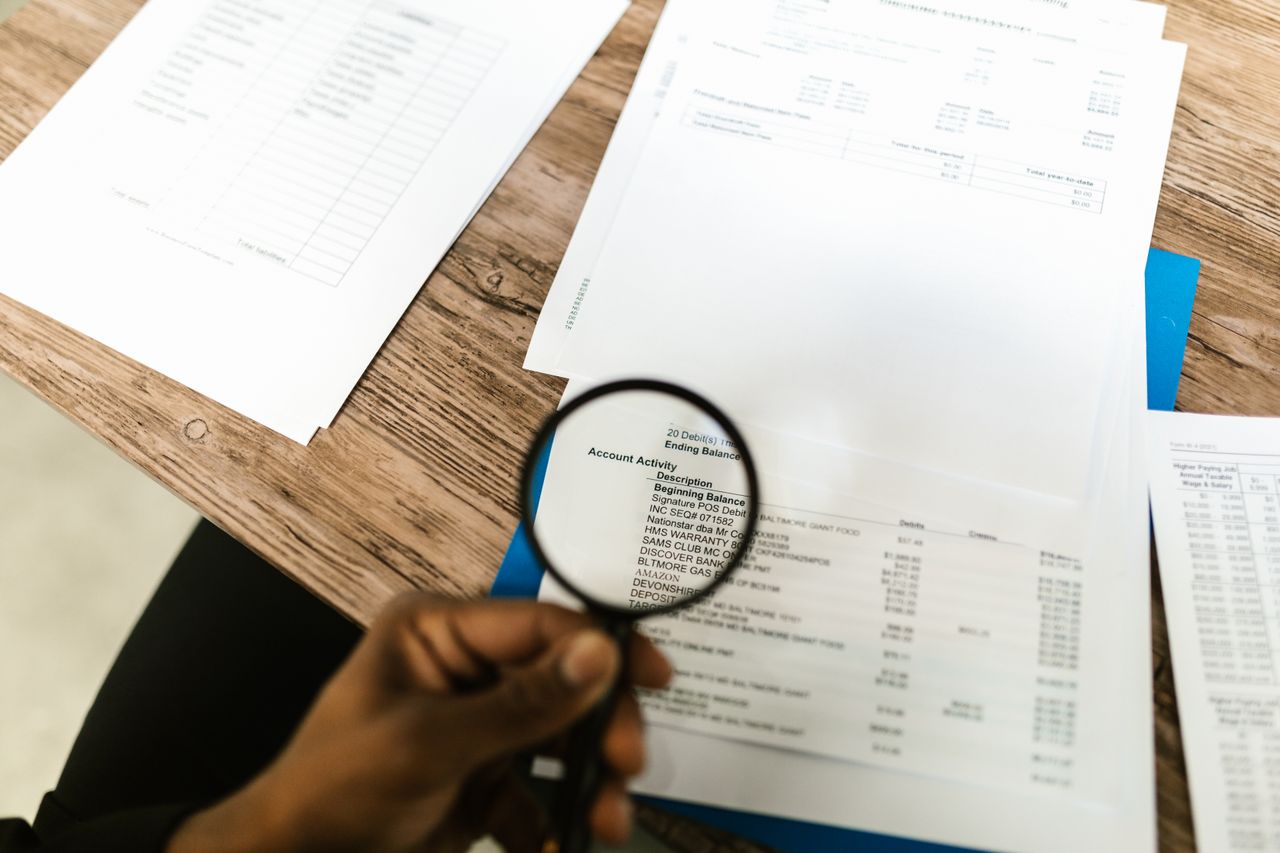
California licenses private investigators through BSIS, and the license number is only the first thing to check. Here is how to verify a firm, what a …
By: Michael D. Julian

California wage-and-hour and PAGA claims are decided on records and witnesses. Here is what a licensed investigator contributes to the defense file, f…
By: Michael D. Julian
A California money judgment is enforceable for ten years, but only if you can find something to collect. Here is how post-judgment asset investigation…
By: Michael D. Julian

In a California premises liability claim, the evidence that decides the case is often gone within days. Here is what a premises liability investigatio…
By: Michael D. Julian