


“Perfect service and communication! Exceeded expectations in every way. Highly recommend!!”
— Client Review

A premises liability investigation is the systematic capture of physical, documentary, and witness evidence about a property condition and an incident, performed early enough that the evidence still exists. In California slip-and-fall and property-condition claims, the outcome is usually determined by what was documented in the first two weeks, not by what anyone argues two years later.
After nearly six decades investigating claims across Riverside, San Diego, Orange, Los Angeles, and San Bernardino Counties, the pattern at National Business Investigations is consistent: the strongest files were opened early, and the weak ones were opened after the surveillance system had already overwritten itself.
California Code of Civil Procedure section 335.1 gives a plaintiff two years from the date of injury to bring an action for personal injury (California Legislative Information). That is a long runway for a claim and a very short one for evidence.
Consider what changes in that window. Retail and commercial video systems commonly retain footage for 14 to 30 days before overwriting. Floor mats are replaced. Lighting is repaired. Signage is moved. Employees who witnessed the incident leave the company. Weather and maintenance records exist but are not preserved unless someone asks. A claim filed at month 22 is investigated against a scene that no longer exists in the condition that mattered.
The volume of civil litigation in California makes this a routine rather than an exceptional problem. The Judicial Council of California reported 278,901 unlimited civil cases filed statewide in fiscal year 2023-24 (Judicial Council of California, 2025). Personal injury, property damage, and wrongful death filings are tracked as their own category within that caseload.
Six categories of evidence, in rough order of how quickly they degrade:
1. Video. Locating every camera with a sightline to the incident, the approach, and the aftermath, and getting the footage preserved before the retention window closes. This includes third-party cameras on neighboring businesses, which nobody thinks to ask about.
2. Scene documentation. Measured photographs, coefficient-of-friction observations where relevant, lighting conditions at the same time of day, and the exact condition and placement of any warning signage.
3. Witness statements. Recorded statements from employees, customers, and bystanders while memory is fresh and before people scatter. Names on an incident report go stale quickly.
4. Maintenance and inspection records. Sweep logs, cleaning schedules, work orders, and prior complaints about the same condition. Notice is frequently the contested issue, and these documents are where it lives.
5. Claimant background. Prior claims history, employment status, and publicly available activity relevant to the alleged limitations, gathered lawfully and documented so it survives a challenge.
6. Chain of custody. A written record of who collected what, when, and how, so the evidence is admissible rather than merely interesting.
Defense counsel, insurance carriers, risk managers, and self-insured retailers, and the best answer to "when" is almost always "now."
Under the California Civil Discovery Act, evidence gathered before litigation is fully usable in it, and evidence lost before litigation cannot be recovered by discovery afterward. That asymmetry is the whole argument for moving early. This is also why how investigative work supports a litigation strategy is worth reading before the first status conference rather than after the first deposition.
Plaintiff-side counsel benefits from the same timing for the mirror-image reason. A documented condition, preserved video, and contemporaneous witness statements make a claim far more credible than a narrative reconstructed from memory.
It reads the same way to a claims adjuster, a mediator, and a jury: dated, sourced, and boring.
That means photographs with metadata intact and a stated capture time, statements that are recorded and transcribed rather than paraphrased, a written preservation demand with proof of delivery, and a report that separates what was observed from what was inferred. Investigators who blur that line create impeachment material for the other side.
Firms evaluating this work can look at our legal investigations practice across Southern California to see how we structure reports, chain of custody, and testimony readiness. Every investigator working these files is licensed through the California Bureau of Security and Investigative Services, and every report is written on the assumption that the investigator may be deposed about it.
Three things, consistently.
The first is third-party video. The subject property's cameras get requested and the coffee shop across the parking lot, which had a clean angle on the approach, does not.
The second is prior-condition evidence. If the same drainage problem generated three work orders in the previous year, that is a notice question, and it is usually available in records nobody requested.
The third is the incident report itself. It is often the only contemporaneous document, it is frequently incomplete, and the employee who wrote it can usually explain the gaps if someone interviews them in the first month rather than the eighteenth.
How quickly should a premises liability investigation be opened? Within days of notice, and ideally within the first week. Commercial video retention often runs 14 to 30 days, so a preservation request sent after that window has closed cannot recover footage that has already been overwritten.
What is the statute of limitations for a personal injury claim in California? California Code of Civil Procedure section 335.1 provides two years from the date of injury for most personal injury actions. Different periods apply to claims against public entities and to professional negligence claims, so counsel should confirm the applicable deadline.
Can an investigator obtain security footage from a neighboring business? Often, yes, through a properly directed preservation request and cooperation from the business. Third-party cameras are one of the most commonly overlooked evidence sources in premises cases, particularly for parking lot and approach-path incidents.
Does surveillance of a claimant have to follow specific rules in California? Yes. Lawful surveillance is limited to public settings where there is no reasonable expectation of privacy, and it must be conducted by a licensed investigator and documented for admissibility. Work that ignores those limits damages the case it was meant to support.
Who typically hires a premises liability investigator? Defense counsel, insurance carriers, risk managers for retail and property owners, and plaintiff-side firms that want a documented scene record. The service is the same; the questions being answered differ.
What areas does NBI cover for this work? Our corporate office is in Murrieta, and our core service area is Southern California, including Riverside, San Diego, Orange, Los Angeles, and San Bernardino Counties, the Inland Empire, and the Temecula Valley.
If you have a premises claim where the scene is still fresh, the window to capture it is open now and will not stay open. National Business Investigations has been conducting legal investigations for California counsel and carriers since 1967. Contact us to discuss what your file needs.
Michael D. Julian has more than 30 years of experience in investigations and corporate security and leads National Business Investigations, a California licensed investigative firm founded in 1967. He served as President of the California Association of Licensed Investigators from 2005 to 2015. Connect with him on LinkedIn.
Focused investigative support for complex, high-stakes matters.
Witness locates, interviews, evidence recovery, financial records investigations, cyber crimes, and asset search & recovery.
Explore Legal Investigations >>Validate claims, identify red flags, document activity, and support defensible decisions in potential fraud matters.
Explore Insurance Investigations >>Executive background investigations, due diligence, business intelligence, theft, computer forensics, and protection support.
Explore Corporate Services >>Gather the investigative information needed to evaluate legitimacy and disability level with clarity and confidence.
Explore Workers Comp Support >>Pre-litigation, mid-case, or post-judgment—identify where assets may reside to support appropriate strategy and settlement.
Explore Asset Discovery >>Obtain evidence that may not otherwise be provable in or out of court—especially when other methods fall short.
Explore Surveillance >>Having been in business for decades, we know there are many investigation companies you can call on. One does not thrive for over fifty years in this industry without a foundation of honesty, integrity, and professionalism.
We can never promise results—but we always guarantee our performance. If you are not happy with our performance, you only pay what you believe our investigation is worth.
Contact us to get started and find out why clients choose NBI for high-accountability investigative support.
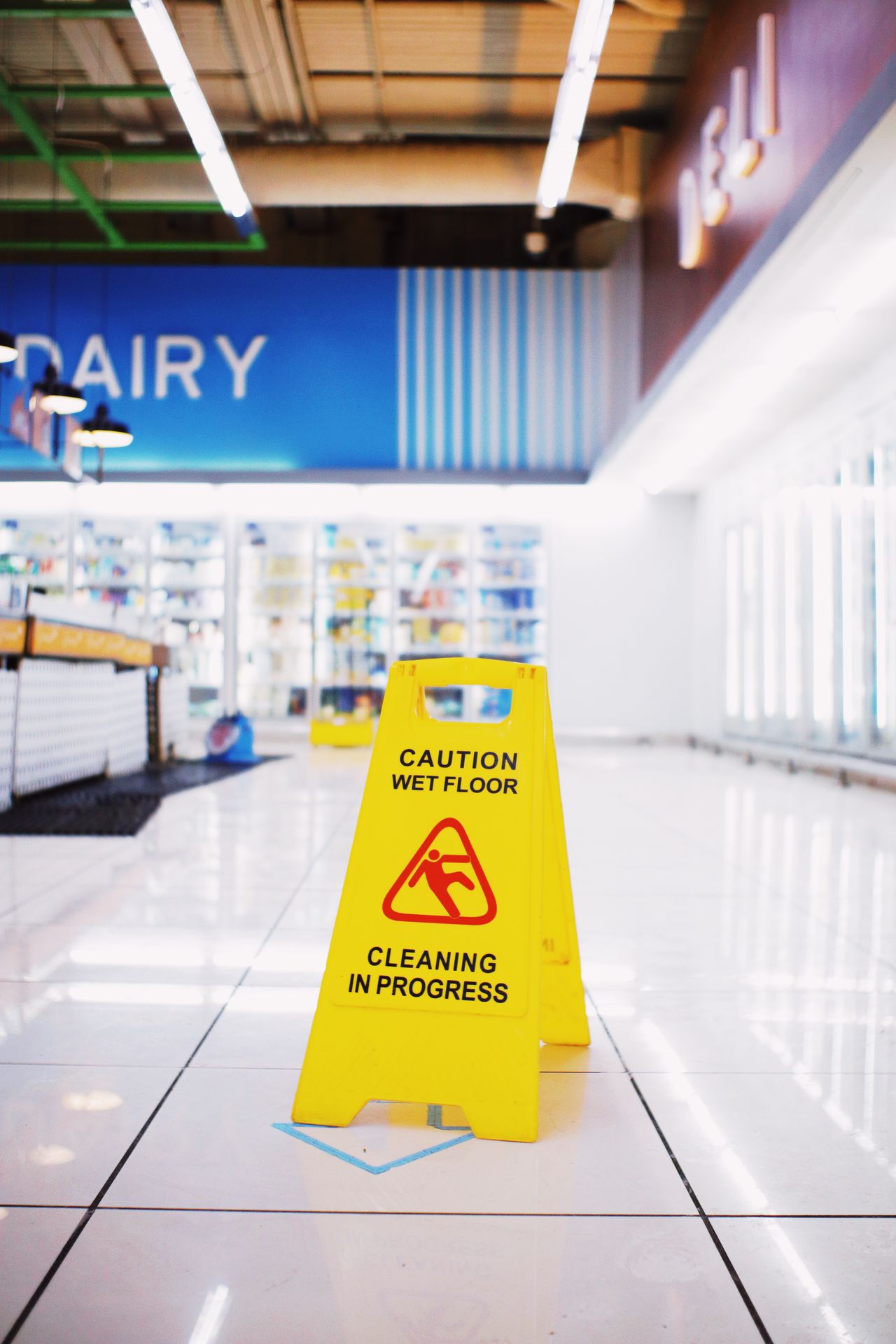
In a California premises liability claim, the evidence that decides the case is often gone within days. Here is what a premises liability investigatio…
By: Michael D. Julian
Storm season brings out-of-area contractors, upfront deposits, and disappearing crews. Learn how licensed investigators verify a contractor, document …
By: Michael D. Julian
A standard background check is not enough for a CEO or CFO hire. Learn what an executive background investigation verifies, why boards commission them…
By: Michael D. Julian
Hiring a nanny, caregiver, or household employee means trusting a stranger with your family and home. Learn what a professional background investigati…
By: Michael D. Julian